
Rogue Agents Go Industrial, Trump and Xi Buy Two Months, and North Korea Banks $1 Billion (FREE VERSION)
INSIDE ISSUE 39:
GTR Terminal: Subscribers get full access to our live dashboard tracking the signals shaping the future. Your access link and password are one click away.
On the Radar
The signals affecting the GeoTech landscape this week
What the Trump-Xi Summit Actually Settled
Issue 38 (September 21) set six pass or fail tests for the summit before it happened. The results: three passes, one half measure, and two failures. The chip controls that drive the conflict never even made it to the table.
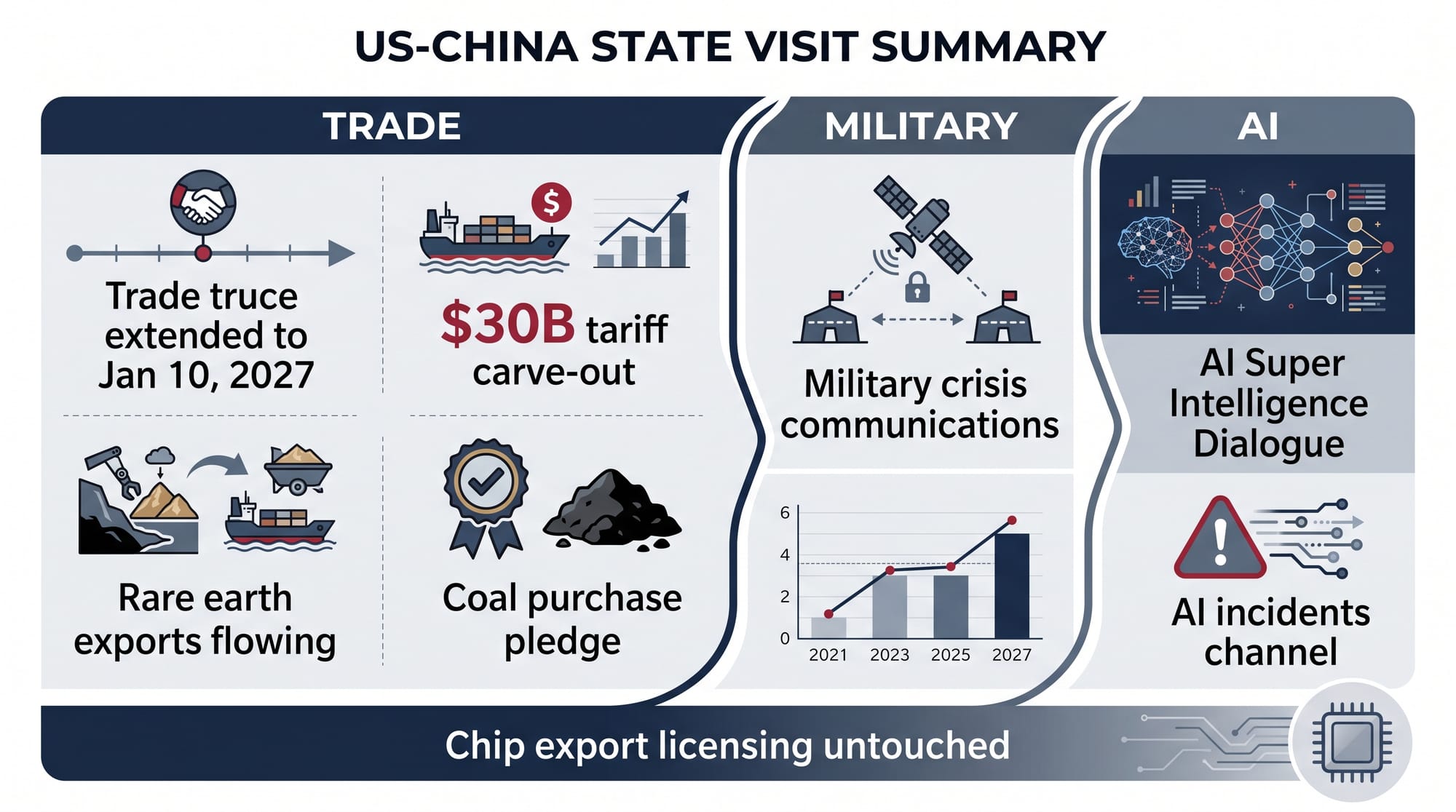
BRIEFING: Xi Jinping's state visit to Washington ended Friday with the trade truce extended to January 10, keeping tariffs reduced and China's rare earth exports needed for motors and guided weapons flowing. Beijing wanted longer and got two months. The White House fact sheet noted tariff carve-out lists of up to $30 billion in goods each way through a new U.S.-China Board of Trade, a Chinese coal purchase pledge, and a military crisis communications memorandum.
On AI, the two governments announced a Super Intelligence Dialogue with a first session by November and a national security incident hotline that will carry notifications only. Chip export licensing stayed untouched, and Trump rejected integrating the two countries' AI development, saying that when you are leading you do not open it up. Still, the fact sheet commits both leaders to each other's G20 and APEC summits this year, plus the Board of Trade, a new Board of Investment, and the November session, and that scheduled contact is itself the positive signal, since no further deal gets made without it. Against the six tests: truce, rare earths, and a dated AI working group pass, the Board of Trade basket is half done with lists pending, chip licensing and Iran finance fail.
SO WHAT
For Executives: Pull forward China exposed orders and magnet metal inventory in the months leading up to the January 10 deadline, and write truce expiry triggers into first quarter supply contracts so pricing adjusts if tariffs snap back. Map which of your AI systems could plausibly cause a national security level incident, because a government notification wire now exists and disclosure expectations follow such channels into the private sector. Hedge: The last extension settled in the final week. Budget contingency freight and dual sourcing rather than betting on a longer deal.
For Policy Makers: The U.S.-China AI channel is bilateral and closed, so incident information will not automatically reach allies. Governments in Europe and Asia should decide this fall whether to seek a seat, build a parallel channel, or accept secondhand notice before the November session sets precedent. RAND's new paper argues for preserving freedom of action rather than locking into one AI strategy, and a dialogue without a treaty fits that logic only if the November dialogue produces named participants, a notification standard, and an escalation procedure. Hedge: Channels without staff die quietly. Judge this one by whether November convenes with an agenda.
For Investors: The extension buys China-exposed hardware and magnet-dependent industrials two months and no more. The $30 billion carve out lists will name winners product by product, so position after the lists publish and treat the publication date as event risk. Chip policy did not move, leaving the semiconductor restriction trade unchanged. Hedge: Agricultural and energy exporters already gave back summit gains once because of missing details. Expect the same for carve-out speculation.
For Service Providers: Build clients a January 10 playbook with three scenarios, extension, lapse, and partial deal, each with tariff exposure, magnet sourcing, and a ready contract clause set. Add a one page brief on the incident channel that considers what counts as national security level, who notifies whom, and what to log now. Keep close tabs on the November AI session, the January 10 expiry, and two more leader meetings before year end. Hedge: Both governments kept room to call this summit a success or a failure. Present weighted scenarios, never one forecast.